

If your company hasn’t secured a contract for certain IT hardware components for 2026, then you’re already too late.
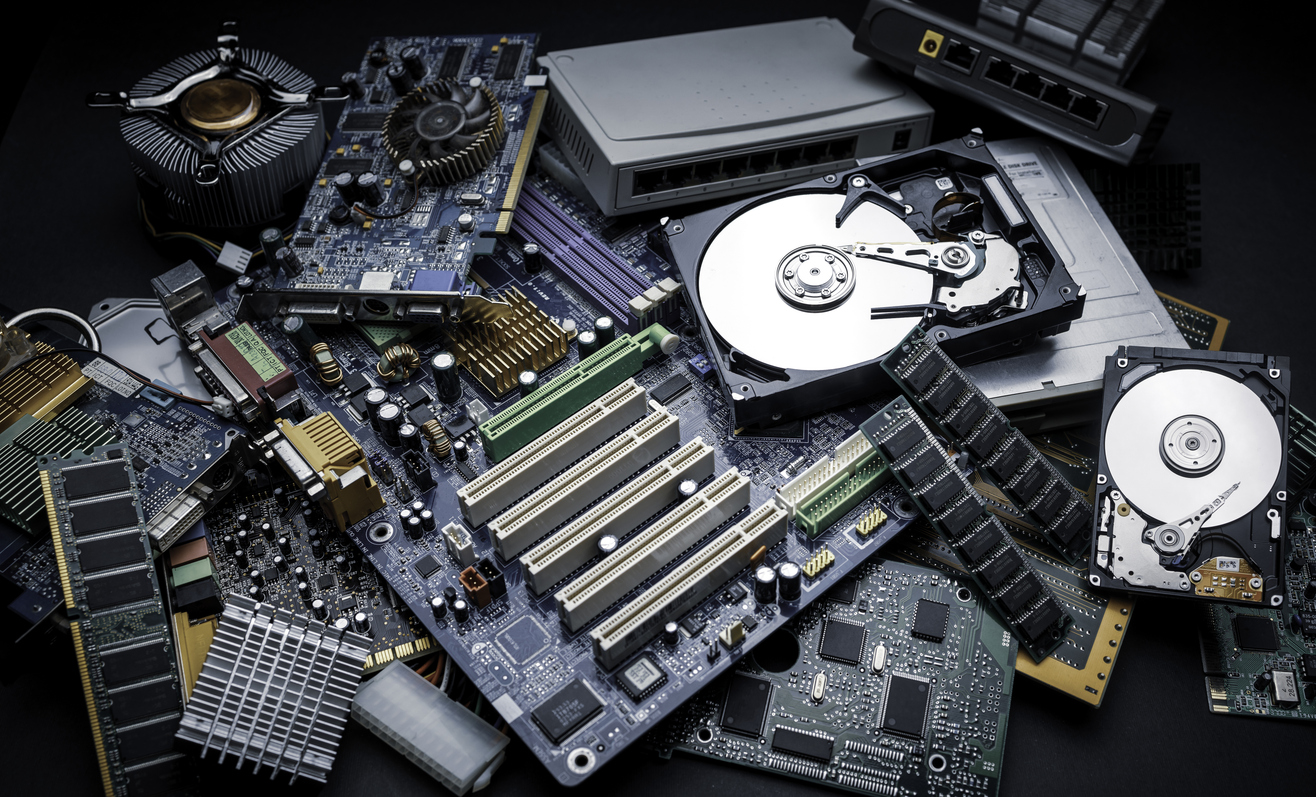
Western Digital and Seagate recently announced they sold out their 2026 stock of hard drives and other IT hardware components, with long term agreements for portions of their 2027 and 2028 stock.
Micron and SK Hynix made similar statements about locking in agreements for all their 2026 DRAM (a specific type of RAM commonly used in computers and servers). While Samsung Electronics hasn’t made a public statement on its sales, SamMobile reported that Samsung’s memory division wouldn’t send its DRAM to the Galaxy division, showing a desire to maximize profits instead sharing resources within the firm.
Hyperscalers are expanding their AI and cloud capacity, and they’re buying up all the IT hardware they can to scale up as quickly as possible.
IT procurement teams have to be proactive or they will be left behind in this market entirely.
Why Do Manufacturers Sell Out Their Stock?
At first glance, the bulk sales from manufacturers like Western Digital and SK Hynix seem illogical. Demand shows no signs of slowing down, so these vendors could sell their stock more incrementally over 2026 and raise the prices to meet demand. Selling all their 2026 stock early in Q1 could mean leaving money on the table.
One reason to avoid this approach is that selling incrementally could frustrate major customers who want the hard drives and DRAM as soon as possible. The stock they’re agreeing to buy isn’t sitting on the shelves, ready to ship. These manufacturers are projecting the total units they’ll be able to produce in 2026 and beyond, then signing agreements to send them to customers once they’re done.
With LTAs in place, both sides get what they want. The buyers get price consistency and guaranteed stock to match their growing needs for RAM, hard drives, and other components. The manufacturers can be certain that all their stock will be sold to guarantee lucrative margins on their product. Further, they only need to handle logistics for a smaller number of bulk deals instead of numerous, less lucrative deals.
Manufacturers could increase production capacity, but it can be advantageous to limit supply of these highly sought-after components. These vendors may ask themselves: Why risk driving the price down with more stock when they can keep raising prices with minimal risk of losing customers?
According to research from ComputerBase, the average price of the most popular RAM modules has more than tripled from September 2025 to January 2026. Hard disk drives saw a 40% increase during the same span. Assuming minimal changes to production costs, those increases are all easy profit.
There are very few major vendors in this market, and IT hardware manufacturing is a difficult market to break into. These manufacturers don’t have to collude to understand the benefits of limiting supply across the board. The fewer units they collectively produce, the more they can charge for each product.
How Will Manufacturers Address the Shortage of IT Hardware
If manufacturers are selling every single unit they produce, then they could up capacity and make more money. The genAI and cloud vendors need plenty of centre de données capacity, and there is no immediate sign of that demand slowing down.
Scaling too quickly is risky for the manufacturers. If they end up with leftover stock after producing more units, newer models of RAM modules and hard drives will outclass those unsold units and undermine their value. Manufacturers have to minimize their risk and prepare for the possibility of their products becoming less relevant.
Even within the AI industry, business leaders see this boom won’t last forever. Sam Altman of OpenAI stated in 2025 he believes investors are overexcited about AI. As of now, CapEx around AI infrastructure is rising and so are the prices of the hardware components that fuel AI. Reuters reports that Alphabet, Amazon, Meta, and Microsoft will collectively spend $650 billion on AI-related infrastructure in 2026, up from $410 billion in 2025.
This appetite for AI data center spending will tail off eventually. It’s just a matter of when. Manufacturers don’t want to be left holding the bag when that happens.
By maintaining the same capacity and entering LTAs with customers, manufacturers are reducing their exposure to sudden market changes. Organizations that would have bought additional stock may rethink their IT hardware strategy in the wake of the supply shortages. The market for DRAM and hard drives could consolidate further, leaving fewer eager customers ready to pay top dollar.
Competition may arise given the lucrative opportunities that this market offers, but opening a factory to create next-generation, complex IT hardware is not as simple as setting up a lemonade stand. The production logistics, mineral procurement, skilled labor, supply chain management, and upfront capital required to produce IT components makes the barrier to entry high.
What Does This Mean for Smaller IT Hardware Purchasers
If you don’t have nine-figure budgets to deploy your IT infrastructure, this current market is not designed for you.
IT hardware manufacturers are looking for customers that will spend millions on bulk sales, so anyone below that threshold is on the outside looking in. Once these manufacturers have their preferred partners, it can be challenging for smaller customers to break into that group.
This lack of access will drive a wedge in the IT hardware market. The top end buyers need immediate data center scale and will burn through capital and take on massive debt to get it. According to a 2026 Washington Post report, technology companies took on a record $108 billion in bond debt during Q4 2025, with the target of scaling up AI data center operations. Anyone who isn’t at the top of the market will be left fighting for access to high-powered IT equipment.
The next best option to brand new IT equipment is equipment that is only a few years old. The best way to purchase that technology is through an IT hardware reseller. Fournisseurs ITAD have IT hardware that they procure, wipe, and test to ensure it still functions as needed. They often have bulk stock of powerful IT hardware available for a lower price tag than the brand new models.
3 Approaches for Smaller IT Buyers
If you don’t have tons of money laying around for IT hardware procurement, you need to adjust your company strategy. You could try to rework your entire approach and avoid the competitive IT hardware market, but that is much easier said than done. Apple’s Lazy approach to AI integration has allowed them to get the best of AI advancements without the need for sunk costs in massive AI infrastructre.
For customers without huge IT budgets, here are three options to get creative.
Pull Together Capital to Make a Lucrative Offer for Computing Hardware
If missing out on the latest IT hardware is out of the question, then you may need to join the biggest players in the market. Manufacturers will focus on customers who can commit to scale over long periods of time.
Vendors don’t publicize the details of their sales agreements, but the math can tell the story. Dividing Micron’s 2025 DRAM revenue of $28 billion across 1,000 customers would leave us with an average agreement of $28 million. We don’t know the actual number of customers, but clearly these deals are operating at a huge scale.
The cost may be worth it if there is truly no replacing the hardware components you need. Each organization will have to assess if this level of investment is sustainable or just a short term gamble.
If company leadership is worried that they are entering the AI market too late, then investing in this specialty hardware may not be appealing. However, executives with a specific vision for what the increase in data center capacity can do for them may want to find out how much money they can pull together.
Organizations can look into business loans or bond debt to bring enough funds to the negotiating table with manufacturers. Smaller companies could even try to pool their resources and negotiate a deal with the manufacturers as a unit.
Another option to secure capital quickly is liquidating old hardware that the brand new equipment will replace. IT hardware retains value more than some people may think, especially if it is just a few years old. An ITAD can help companies determine the value of their existing IT infrastructure and how quickly they can act to decommission and remove the hardware.
Disclaimer: The information shared is for educational and informational purposes only and should not be considered legal or financial advice. Please consult a licensed professional for advice specific to your situation
Look For Alternate Manufacturers
The major players are all reevaluating how they sell their most prized commodities, but there are some alternate manufacturers that organizations can look into. For example, China is scaling up its DRAM and storage production with vendors such as CXMT and YMTC.
While first-party deals with these state-owned manufacturers may not be viable for many organizations due to international commerce restrictions, organizations can look to the secondary market. Online marketplaces such as Alibaba and eBay often have bulk DRAM and other computing components from China available. Carefully vet any online vendors before moving forward with a purchase.
There are also smaller manufacturers such as Windbound Electronics and Nanya Technology that could be more open to small-scale deals.
Buy Used IT Assets
The secondary market of used IT assets is the most practical path for many customers. While you won’t get brand new components, equipment that’s one or two generations old can still meet most IT infrastructure needs.
Some used IT assets have minimal wear and tear and are just a generation or two behind the latest models from the manufacturers. If you don’t have the capital to go all in on the latest IT hardware, you can spend less to get a product that could still meet your requirements.
Partnering with an ITAD allows you to negotiate less expensive deals for a wide range of Matériel informatique. This way you won’t overpay for the most expensive hardware if you don’t need it.
Conclusion
Demand for RAM, disques durs, and other IT components keeps growing with no signs of slowing down. These markets will generally grow alongside the demand for centres de données focused on AI and cloud.
While increases to output and new players in the market are possible, they are not something that business leaders can wait for to alleviate the demand crunch. There’s no easy way to replace these premium components, so organizations need to take proactive steps to find a new path forward.


 French
  English
  German
  Spanish
  Swedish
  Dutch
Dutch