

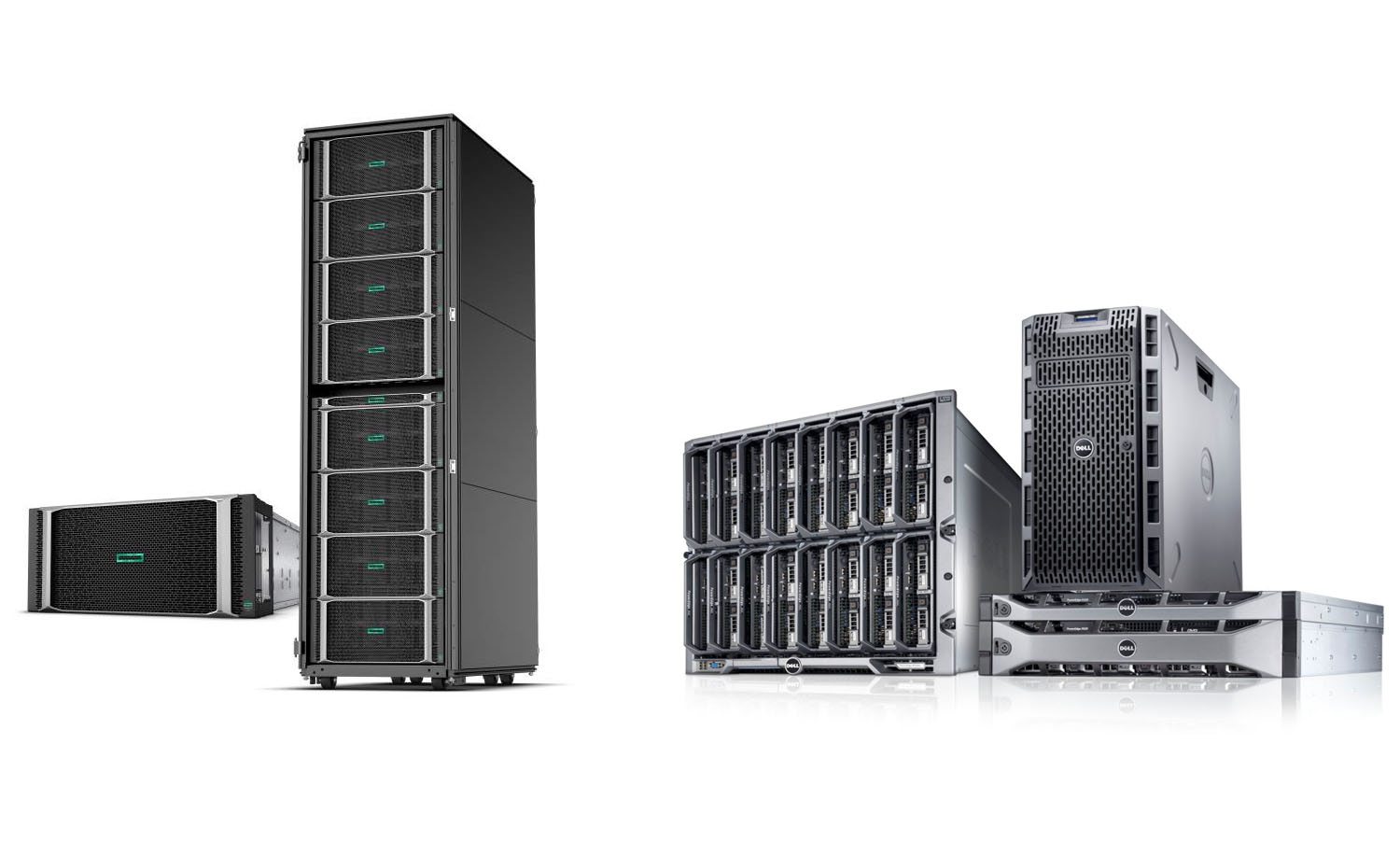
Quick Comparison: Dell vs HPE at a Glance
For IT leaders who need the bottom line first—here’s how Dell PowerEdge and HPE ProLiant stack up across the factors that matter most:
| Factor | Dell PowerEdge | HPE ProLiant | Winner |
|---|---|---|---|
| Firmware Access | Free updates, no contract required | Requires active support contract | Dell |
| Management Interface | iDRAC (physical license, transferable) | iLO (software license, non-transferable) | Tie |
| Support Quality | ProSupport highly rated, 24/7 senior engineers | Strong but inconsistent regionally | Dell |
| Hardware Security | Cyber Resilient Architecture | Silicon Root of Trust (hardware-level) | HPE |
| As-a-Service Model | APEX | GreenLake (Gartner Leader 2025) | HPE |
| Price Flexibility | Less negotiable, consistent pricing | More negotiable, relationship-driven | Depends |
| Secondary Market Value | Strong resale demand | Strong resale demand | Tie |
| Market Share (Q4 2024) | 7.2% (tied #1) | 5.5% (#3) | Dell |
Résultat final
For most enterprise deployments, Dell PowerEdge offers a more accessible ownership experience with free firmware updates and consistently strong support. HPE ProLiant excels in security-critical environments and organizations leveraging GreenLake’s consumption model.
Understanding Your Server Decision: Why This Choice Matters
Choosing between Dell PowerEdge and HPE ProLiant isn’t just about specs—it’s about how your organization will manage infrastructure over its full lifecycle. Your choice impacts:
- Total cost of ownership over 3-7 years
- Support experience during outages and critical incidents
- Security posture against firmware and supply-chain attacks
- Operational efficiency through management tooling
- End-of-life value recovery and disposition planning
Need help planning your server refresh?
We can estimate resale value and build a secure end-of-life plan.
Dell PowerEdge: 2025 Lineup & Capabilities
Dell PowerEdge servers have long been a favorite in enterprise environments for their reliability, broad configuration options, and strong support ecosystem. In 2025, Dell’s 16th generation PowerEdge lineup continues to emphasize performance, security, and automation.
PowerEdge 16G: What’s New
Dell’s latest PowerEdge generation focuses heavily on cyber resiliency, automation, and workload acceleration. Key highlights include:
- Silicon-based Root of Trust for secure boot and firmware integrity
- Enhanced iDRAC9 management with improved automation and telemetry
- Support for next-gen Intel Xeon and AMD EPYC processors
- DDR5 memory and PCIe Gen5 for higher bandwidth workloads
- Improved cooling and power efficiency for dense deployments
Best Dell PowerEdge Models (2025)
General Purpose: R760 / R660
High Density: R760xd2
Edge / Remote: XR5610
GPU / AI: XE9680
Dell Strengths
✓ Pros
- Firmware updates available without support contract
- Broad ecosystem and configuration flexibility
- Strong ProSupport reputation
- Excellent iDRAC management tooling
✗ Cons
- Pricing can be less negotiable
- Some advanced iDRAC features require licensing
- Less integrated consumption model than GreenLake
Dell Firmware Advantage
One of Dell’s biggest advantages in 2025 remains firmware access. Dell continues to provide BIOS, iDRAC, and other firmware updates without requiring an active support contract—making long-term ownership simpler and reducing “surprise” operational costs.
HPE ProLiant: 2025 Lineup & Capabilities
HPE ProLiant servers are known for strong security engineering, tight integration with HPE’s ecosystem, and a well-developed consumption model through GreenLake. HPE’s Gen11 ProLiant line continues to focus on secure-by-design infrastructure and lifecycle management.
ProLiant Gen11: What’s New
HPE’s 2025 ProLiant strategy emphasizes hardware-level security and hybrid cloud operations. Key updates include:
- Silicon Root of Trust with continuous firmware validation
- iLO 6 enhancements for remote operations and security controls
- Support for latest Intel and AMD server platforms
- DDR5 and PCIe Gen5 to match modern workload needs
- Deep GreenLake integration for consumption-based deployments
Best HPE ProLiant Models (2025)
General Purpose: DL380 Gen11 / DL360 Gen11
High Storage: DL380a / DL380 Gen11 variants
Edge: ProLiant DL20 / MicroServer
GPU / AI: HPE Cray / GPU-focused systems
HPE Strengths
✓ Pros
- Industry-leading security posture
- GreenLake consumption model maturity
- Strong ecosystem for hybrid operations
- Excellent hardware lifecycle tooling
✗ Cons
- Firmware updates typically require active support contract
- Licensing can be complex for iLO features
- Support quality may vary regionally
HPE Security Advantage
HPE’s Silicon Root of Trust is one of the strongest differentiators for security-sensitive organizations. It provides continuous verification and recovery capabilities, making it particularly attractive for regulated industries and high-risk environments.
Head-to-Head Comparison: Dell vs HPE
Here’s how the two platforms compare across the most common decision criteria for enterprise server deployments.
Management & Remote Operations
Dell’s iDRAC and HPE’s iLO are both excellent remote management solutions, but licensing and portability differ.
| Catégorie | Dell iDRAC | HPE iLO | Notes |
|---|---|---|---|
| Licensing | Physical license, transferable | Software license, typically non-transferable | Impacts resale and lifecycle planning |
| Automatisation | Strong REST APIs, tooling, telemetry | Strong APIs, deep HPE ecosystem hooks | Tie depending on environment |
| Interface | Very mature and widely used | Modern, security-focused | Preference varies by team |
Sécurité
Both vendors prioritize security, but HPE’s approach tends to be more “security-first” at the hardware layer, while Dell emphasizes cyber resiliency and recovery.
Support & Ownership Experience
Dell is widely praised for consistent support quality, while HPE support experiences can be excellent but more variable by region and contract structure.
Use Case Recommendations
Here’s a practical way to decide based on your most likely deployment scenario:
Choose Dell PowerEdge if…
- You want firmware access without contract dependencies
- You prioritize consistent support during outages
- You need broad configuration flexibility
- You plan to resell servers and want transferable licensing advantages
Choose HPE ProLiant if…
- You operate in a security-critical or regulated environment
- You plan to use a consumption model (GreenLake)
- You prefer tight ecosystem integration for hybrid operations
- You have strong HPE partner leverage for pricing
Planning Your Server Lifecycle
No matter which platform you choose, the lifecycle plan should be part of the original procurement decision. Key lifecycle considerations include:
- Refresh cycles (3–7 years depending on workload)
- Firmware update strategy
- Support contract structure
- Resale or redeployment plans
- Secure end-of-life data destruction
Whether you choose the ownership simplicity of Dell or the security-first engineering of HPE, utilizing professional services de liquidation de centres de données can help you recover maximum value from your outgoing hardware during a server refresh.
Want to maximize resale value at end-of-life?
We can evaluate your servers for remarketing potential and design a compliant ITAD plan.
Request a Free Quote → Learn Our ProcessData Security at End-of-Life
Server refresh planning must include secure data sanitization. Storage devices in servers often contain regulated or sensitive information, and improper disposal can create major risk.
At minimum, end-of-life planning should include:
- Documented chain of custody
- NIST 800-88 aligned data sanitization
- Certificates of data destruction
- Responsible recycling through certified programs
Questions fréquemment posées
It depends on your priorities. Dell is often preferred for ownership simplicity (firmware access + support consistency). HPE is preferred in security-first environments and for organizations leveraging GreenLake’s consumption model.
No. Dell generally provides firmware updates without requiring an active support contract, which can reduce long-term operational friction.
Often, yes. HPE commonly requires an active support contract for firmware updates, which should be factored into total cost of ownership.
Both are strong. Dell’s iDRAC is widely praised for maturity and portability of licensing. HPE’s iLO is strong and tightly integrated with HPE’s ecosystem and security model.
The Verdict: Which Should You Choose?
If you want the “default” enterprise choice with fewer ownership frictions, Dell PowerEdge is often the safer bet. If your environment is security-critical or you want a mature consumption model, HPE ProLiant is a strong fit.
Best for Most Enterprises
Dell PowerEdge — easier long-term ownership, firmware access, and strong support.
Best for Security-First Orgs
HPE ProLiant — industry-leading security posture and recovery capabilities.
Best for Consumption Models
HPE GreenLake aligned deployments where usage-based infrastructure is the goal.
Planning Your Next Server Refresh? We Can Help.
At exIT Technologies, we’ve spent over 30 years helping organizations navigate the complete server lifecycle—from acquisition planning through secure disposition and value recovery.
Email: sales@exittechnologies.com



 French
  English
  German
  Spanish
  Swedish
  Dutch
Dutch